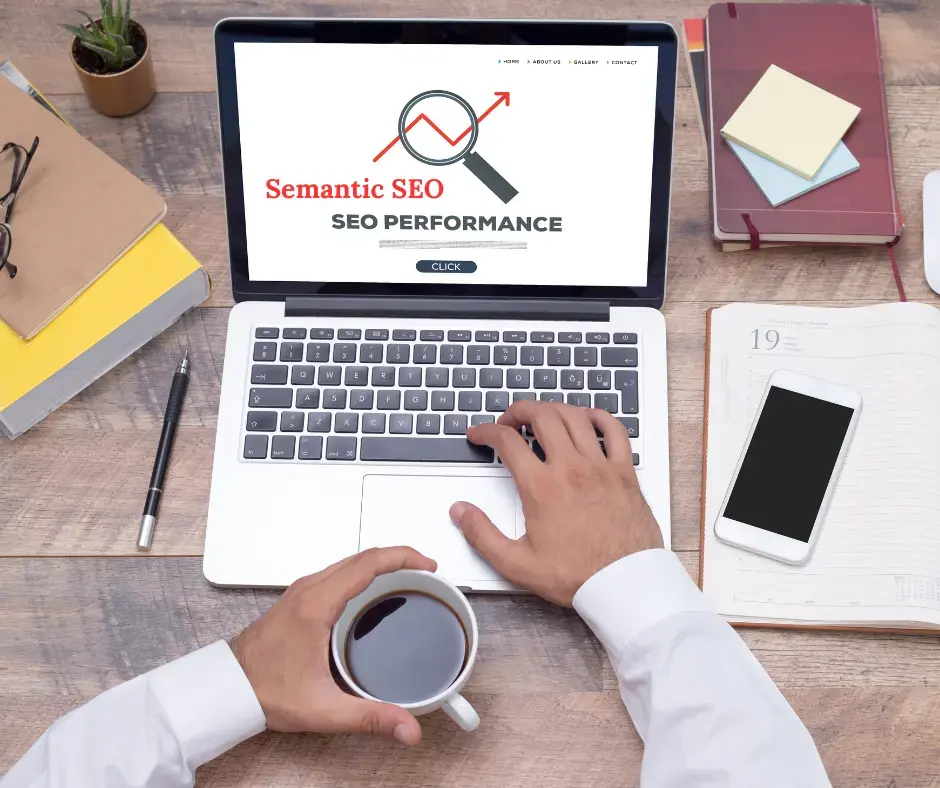
The landscape of search engine optimization (SEO) is constantly evolving, making it crucial for businesses to stay ahead of the curve. As we enter 2026, one strategy that has gained significant traction is Semantic SEO. Unlike traditional keyword-focused approaches, Semantic SEO prioritizes context, user intent, and the relationships between concepts, enabling search engines to deliver more accurate and relevant results.
By integrating Semantic SEO into your digital strategy, you can improve your website’s search visibility, user engagement, and overall content effectiveness. Businesses across industries are adapting to this shift, leveraging AI-driven insights and structured data to stay competitive. For a deeper understanding of how digital marketing strategies are evolving, explore our guide on The Evolution of Marketing from Traditional to Digital.
What is Semantic SEO?
Semantic SEO involves optimizing your content to align with the search engines’ understanding of context and intent rather than relying solely on specific keywords. This approach focuses on the meaning behind search queries, aiming to deliver more accurate and relevant results to users.
Key Elements of Semantic SEO:
- Understanding Search Intent: Google categorizes queries into four types:
- Informational (e.g., “How does Semantic SEO work?”)
- Navigational (e.g., “Google NLP API”)
- Transactional (e.g., “Buy SEO course online”)
- Commercial Investigation (e.g., “Best Semantic SEO tools 2026”)
- Topic Clusters & Content Relationships: Instead of optimizing for single keywords, Semantic SEO structures content around interconnected topics—a technique called topic clustering.
- Entity-Based Optimization: Entities help search engines recognize concepts, rather than just words. They are the foundation of Google’s Knowledge Graph, which stores information about people, places, and things.
- Structured Data & Schema Markup: Schema.org markup helps search engines better understand your content by defining relationships between entities.
- Contextual Optimization & NLP (Natural Language Processing): Google’s AI-powered algorithms, such as RankBrain, BERT, and MUM, rely on NLP to interpret sentence structure, synonyms, and relationships between terms.
To dive deeper into how search engines interpret context and intent, explore our comprehensive guide on Semantic Search. This approach is transforming the way Google ranks content, prioritizing meaning over exact-match keywords. Understanding how semantic search works can help you optimize your content for better visibility and engagement.
Evolution from Traditional to Semantic SEO
Historically, SEO strategies centered around exact-match keywords, often leading to keyword stuffing and content that lacked depth. With advancements in search engine algorithms, there’s been a shift towards understanding the semantics—the meaning behind words and phrases. This evolution has been driven by:
- Google’s Knowledge Graph: Introduced in 2012, it helps Google understand relationships between entities and deliver more informative search results.
- Hummingbird Update (2013): Enhanced Google’s ability to interpret the intent behind search queries.
- RankBrain (2015): An AI system that processes search results, focusing on the context and relevance of content.
- BERT Update (2019): Improved understanding of how words relate to each other in a sentence, enhancing the interpretation of search intent.
These developments underscore the transition from keyword-centric to context-driven SEO practices. Understanding how different technologies impact search behavior is essential for SEO success, helping marketers adapt to evolving search algorithms and user expectations.
Semantic SEO vs. Traditional SEO: Key Differences
Understanding semantic and traditional SEO distinctions is vital for effective strategies.
| Aspect | Traditional SEO | Semantic SEO |
| Focus | Specific keywords | User intent and context |
| Content Strategy | Keyword density and placement | Topic depth and relevance |
| Optimization Techniques | Meta tags, backlinks | Structured data, entity relationships |
| User Experience | Often overlooked | Central to Strategy |
Semantic SEO and Entities: The Key to Smarter Search Optimization
Semantic SEO and entities are transforming how search engines rank content by focusing on meaning, context, and user intent rather than exact-match keywords. Entities—distinct concepts like people, places, and organizations—help Google connect information through its Knowledge Graph, improving relevance and search visibility. Optimizing for entities enables websites to appear in rich results like knowledge panels and featured snippets.
By understanding entity relationships, search engines deliver more accurate results. For instance, Google differentiates between “Apple” the fruit and “Apple” the company using entity associations, search intent, and history. Businesses can leverage entity-based SEO by implementing structured data, topic clusters, and internal linking, aligning with AI-driven algorithms like RankBrain and BERT for long-term SEO success.
Entities vs. Keywords
| Aspect | Keywords | Entities |
| Definition | Words or phrases that trigger search results | Recognizable objects/concepts with unique meaning |
| Interpretation | May have multiple meanings (e.g., “Apple” can mean fruit or a company) | Clearly defined (e.g., “Apple Inc.” as a tech company) |
| Used In | Keyword-based SEO strategies | Knowledge Graph, structured data, NLP algorithms |
Google’s latest algorithm updates prioritize intent-based search, making traditional keyword strategies less effective.
How Google Uses Entities in Search
Google processes entities through the Knowledge Graph, which organizes information into an interconnected web of relationships. This helps Google:
- Provide rich search results (e.g., knowledge panels, featured snippets)
- Enhance voice search accuracy
- Understand context in content
- Rank content based on relevance and authority
Example of Entity-Based Search Results:
A search for “Leonardo da Vinci” will generate:
- A Knowledge Panel with details about his life, artworks, and related searches
- Links to his famous paintings like the Mona Lisa
- Related search queries (e.g., “Renaissance artists”)
This happens because Google associates Leonardo da Vinci as an entity in its Knowledge Graph, linking him to art, inventions, and the Renaissance period.
Why is Semantic SEO Important in 2026?
Adopting Semantic SEO practices ensures your website remains competitive in the ever-evolving search landscape. By optimizing content for both keywords and overall topics, while aligning with user intent, you can gain these key benefits:
You send stronger semantic signals to Google.
Google prioritizes accurate, truthful, and high-quality content to ensure users receive the best information. By providing well-structured, authoritative content that meets Google’s E-E-A-T (Experience, Expertise, Authoritativeness, and Trustworthiness) standards, your website signals quality and relevance, increasing its chances of ranking higher.
Your content ranks higher.
Search engines rely on structured data and semantic relationships to understand content. Implementing schema markup, entity-based optimization, and topic clusters improves search visibility, making it easier for Google to index and rank your pages for relevant queries.
You rank for more keywords.
Semantic SEO broadens your keyword reach by focusing on topic depth rather than individual keywords. This allows your content to target multiple related search queries, capturing more organic traffic and expanding your presence across a wider range of search intents.
Your content appears in SERP features.
By using structured data and optimizing for entities, your website has a higher chance of appearing in rich snippets, knowledge panels, and People Also Ask (PAA) boxes. These high-visibility placements can drive more qualified traffic to your site while enhancing brand credibility.
Your content aligns with AI-driven search features.
Google’s AI-powered algorithms, like RankBrain, BERT, and MUM, analyze content semantically to deliver highly relevant results. Optimizing for structured, well-organized, and intent-driven content increases your chances of being featured in AI Overviews (AIOs) and AI-enhanced search results.
Visitors stay on your website longer.
Semantic SEO enhances user experience by delivering more relevant, engaging, and informative content. By structuring your pages with clear headings, internal links, and well-researched insights, you reduce bounce rates, increase dwell time, and improve conversions.
The Impact of AI and NLP on Today’s Semantic SEO
AI and Natural Language Processing (NLP) have transformed semantic SEO, making search engines more intuitive and user-centric. Google’s move toward contextual understanding began with major algorithm updates, shifting from keyword-based rankings to intent-driven results.
AI and NLP advancements have revolutionized search, leading to AI-generated content that enhances user experience, enabling search engines to deliver more relevant, personalized, and conversational results.
Key AI & NLP Developments in Search
- Hummingbird (2013) – Improved Google’s ability to understand query context.
- RankBrain (2015) – Introduced machine learning for better intent recognition.
- BERT (2019) – Enhanced comprehension of natural language and conversational queries.
- AI Overviews (2024) – Integrated generative AI for instant, in-depth answers.
- Gemini 2.0 (2026) – Advanced AI chatbot offering precise, real-time responses.
With AI Overviews and generative search, SEO is no longer just about keywords—it’s about delivering meaningful, well-structured content that aligns with user intent and AI-driven search experiences.
How to Optimize for AI-Driven Search
- Focus on intent-driven content – Write content that directly answers search queries.
- Leverage structured data – Use schema markup to help search engines understand content relationships.
- Build topic clusters – Organize content around key themes to improve authority.
- Enhance user experience (UX) – Ensure content is easy to read, navigate, and engage with.
At Seize Marketing Agency, we specialize in cutting-edge SEO strategies that align with AI advancements, ensuring higher rankings and better visibility in this evolving search landscape. Stay ahead of the curve—contact us today to optimize your website for the future of search!
How to Implement a Semantic SEO [Best Practices]

The evolution of search engines has shifted SEO from keyword stuffing to a more sophisticated, intent-driven approach. Semantic SEO focuses on optimizing content by understanding the meaning behind words and their relationships. By implementing the following best practices, businesses can enhance search visibility, improve rankings, and future-proof their SEO strategies.
1. Semantic Keyword Research & Clustering
Instead of targeting isolated keywords, focus on topic-based keyword research. This involves:
- Creating a keyword list with semantically related terms and LSI (Latent Semantic Indexing) keywords.
- Identifying long-tail keywords that match user intent.
- Using keyword clustering to group similar queries into content themes.
- Analyzing competitor keywords to discover untapped ranking opportunities.
Search engines now prioritize contextual relevance, so structuring content around broader topics rather than standalone keywords helps establish authority.
With the rise of AI in digital marketing, businesses must optimize for conversational and contextual queries.
2. Topic Clusters & Internal Linking
To signal expertise on a subject, structure content using topic clusters:
- Pillar pages: Cover broad topics comprehensively.
- Supporting content: Subpages that dive into specific subtopics.
- Strategic internal linking: Connect related content using descriptive anchor text.
By implementing this structure, search engines better understand content relationships, which boosts rankings for multiple related queries.
3. Optimize for E-E-A-T (Experience, Expertise, Authoritativeness, Trustworthiness)
Google’s E-E-A-T guidelines (Experience, Expertise, Authoritativeness, Trustworthiness) play a key role in rankings. To align with these:
- Provide accurate, well-researched content from credible sources.
- Highlight author expertise with author bios and relevant credentials.
- Keep content fresh and updated to maintain credibility.
Following E-E-A-T principles increases trust, improving rankings and organic traffic.
4. Use Structured Data (Schema Markup)
Structured data helps search engines understand and categorize content more effectively. Implement Schema.org markup for:
- Articles and blog posts
- FAQs and How-Tos
- Reviews, ratings, and products
- Events, organizations, and local businesses
By adding structured data, content becomes eligible for rich snippets, knowledge panels, and featured snippets, leading to higher click-through rates.
5. Optimize for AI & Conversational Search
With the rise of AI-driven search engines, content must be optimized for natural language queries and voice search. Best practices include:
- Writing in conversational, question-answer format.
- Including FAQs to target People Also Ask (PAA) results.
- Using clear, concise answers to increase visibility in AI-generated search results.
AI algorithms like RankBrain and BERT prioritize content that delivers contextual relevance and natural language understanding.
6. Improve Content Depth & Readability
Content should thoroughly cover a topic while being easy to read. To optimize:
- Break content into scannable sections with subheadings (H2, H3, H4).
- Use bullet points and numbered lists for clarity.
- Incorporate multimedia elements like images, infographics, and videos.
- Maintain a natural keyword distribution without overstuffing.
Comprehensive, user-friendly content keeps visitors engaged, improving dwell time and rankings.
7. Monitor Semantic SEO Performance
To measure the impact of semantic SEO efforts:
- Track keyword rankings and topic-based performance in tools like Google Search Console and Ahrefs.
- Analyze user engagement metrics (time on page, bounce rate, CTR).
- Monitor SERP features (featured snippets, knowledge panels, etc.).
Regular audits ensure the content remains aligned with evolving search algorithms.
Semantic SEO Strategies for Different Industries
Semantic SEO is not a one-size-fits-all approach; different industries require tailored strategies to align with search intent and audience behavior. Below are key industry-specific tactics:
1. Healthcare & Medical Services
- Use structured data for medical conditions, treatments, and FAQs.
- Optimize for SEO for doctors to ensure visibility in local and informational searches.
- Implement conversational content to align with AI-driven health queries.
2. Legal Services
- Leverage AI in digital marketing for law firms to enhance content accuracy and trust.
- Use long-tail keywords targeting case-specific legal queries.
- Implement schema markup for attorney profiles and case studies.
3. E-commerce & Retail
- Optimize product descriptions with NLP-driven keywords.
- Utilize digital marketing for e-commerce strategies to enhance discoverability.
- Implement user-generated content to improve relevance and trust.
4. Home Services & Contractors
- Focus on digital marketing for home services by optimizing service pages for local intent.
- Use structured data for service areas, pricing, and customer reviews.
- Incorporate natural language search terms into content.
5. Financial Services
- Utilize digital marketing for financial advisors to create trust-driven content.
- Optimize for voice search by answering common financial queries.
- Implement entity-based optimization to align with Google’s Knowledge Graph.
6. SaaS & Technology
- Optimize technical content with B2B content marketing strategies.
- Leverage AI-powered SEO tools for predictive keyword analysis.
- Use structured data to enhance visibility in software-related searches.
By applying industry-specific semantic SEO strategies, businesses can improve their rankings, enhance user engagement, and stay ahead in the evolving search landscape.
Best Semantic SEO Tools to Use

Leveraging the right tools can streamline your semantic SEO efforts:
- Google’s Natural Language Processing (NLP) API: Analyzes the structure and meaning of your content, helping you understand how Google interprets it.
- InLinks: Focuses on entity-based SEO, offering insights into how to optimize content around specific topics and concepts.
- SurferSEO: Provides data-driven recommendations for content optimization, including semantic keyword suggestions.
- Frase: Assists in content creation by identifying questions users ask and suggesting relevant topics to cover.
Semantic SEO Examples and Case Studies
Examining real-world applications of semantic SEO offers valuable insights:
- HubSpot’s Topic Clusters: By organizing content into clusters around central themes, HubSpot improved its search visibility and user engagement.
- Moz’s Comprehensive Guides: Creating in-depth resources that cover topics extensively has positioned Moz as an authority, leading to higher rankings and increased traffic.
Common Mistakes to Avoid in Semantic SEO
To fully capitalize on semantic SEO, steer clear of these pitfalls:
- Overlooking User Intent: Focusing solely on keywords without considering what users are truly seeking can lead to irrelevant content.
- Neglecting Structured Data: Failing to implement schema markup can hinder search engines’ ability to understand and display your content effectively.
- Isolating Content: Without proper internal linking, content may remain undiscovered by both users and search engines, limiting its impact.