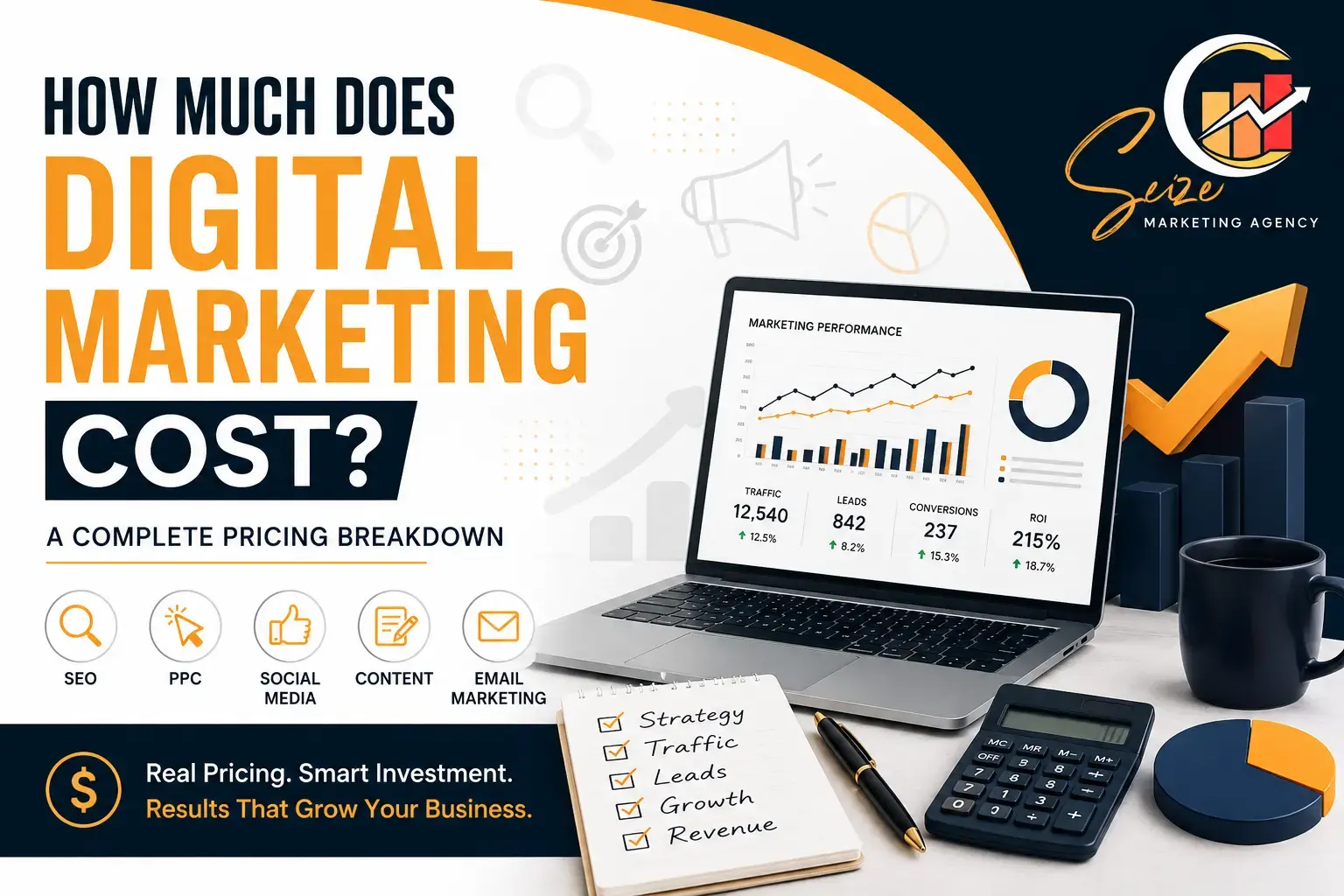

Proving the value of your digital marketing efforts is no longer optional—it’s essential. Understanding digital marketing ROI enables businesses to allocate resources effectively, optimize campaigns, and drive better results. But how do you measure ROI in a way that’s accurate and actionable?
In this guide, we’ll break down the steps, metrics, tools, and strategies you need to evaluate your marketing success and boost profitability in 2026.
What Is Digital Marketing ROI?
Digital Marketing ROI measures the profitability of your digital campaigns relative to the investment made. It answers the key question: Are your efforts delivering more value than they cost?
In digital marketing, ROI measures the profit gained from every dollar spent on marketing. A positive ROI indicates you’re making more than you’re spending, while a negative ROI means you’re losing money on your campaigns.
Why is ROI in Digital Marketing Important?
ROI in digital marketing is essential because it measures the profitability and effectiveness of your campaigns, helping businesses identify high-performing channels and justify budgets. It enables data-driven decisions, ensures accountability, and aligns marketing efforts with overall business growth.
How to Calculate ROI in Digital Marketing
The basic formula for calculating ROI is:
ROI (%) = [(Return−Investment) / Investment] × 100
For projected ROI, estimate the potential revenue by multiplying the number of leads by your lead-to-customer rate and average sale price:
Predicted Return=Leads×Lead-to-Customer Rate×Average Sale Price
Then, use this predicted return in the ROI formula.
For example, if you expect 1,000 leads with a 25% conversion rate and a $50 average sale price, the predicted return would be $12,500. With a $5,000 marketing budget, the predicted ROI would be 150%.
Why Measure Digital Marketing ROI?
Measuring ROI helps pinpoint successful strategies, optimize the marketing budget, and make informed decisions. Here’s why it’s crucial:
-
Determine Success: ROI is a critical metric to assess the success of a campaign. Set an ROI goal at the campaign’s start and evaluate if the campaign achieved its targets, even for awareness-building efforts where revenue might not be the primary metric.
-
Identify What Works: Tracking ROI reveals which parts of your marketing plan are effective and which aren’t, helping you refine your strategy and focus on higher-yield channels.
-
Allocate Budget Effectively: Knowing which campaigns produce the best ROI allows you to adjust your budget to favor high-performing channels and scale back on less effective ones.
Key Metrics to Track Digital Marketing ROI
To accurately measure ROI, focus on these critical digital marketing ROI metrics:
- Impressions and Page Views: These metrics reflect brand awareness, with “cost per impression” being a useful measure for low-ROI campaigns.
- Click-through Rate (CTR): Measures engagement by tracking how many users click on links in ads, emails, or posts.
- Cost per Lead (CPL) and Cost per Acquisition (CPA): These metrics assess how much you’re spending to acquire a lead or convert them into a customer, helping to pinpoint inefficiencies.
- Return on Ad Spend (ROAS): A similar measure to ROI but focused specifically on pay-per-click (PPC) campaigns.
- Conversion Rate: The percentage of leads that turn into customers, which is a key metric for evaluating the effectiveness of your campaigns.
- Average Order Value (AOV): The average amount spent by customers, which helps assess whether you’re driving high-value purchases.
- Customer Lifetime Value (CLV): Measures the total revenue from a customer over their relationship with your brand, providing a long-term view of ROI.
How to Measure Digital Marketing ROI

- Define Campaign Objectives
Start by setting clear goals. Are you aiming to increase sales, drive traffic, or generate leads? Define specific key performance indicators (KPIs) for each objective. - Track All Costs
Include both direct and indirect costs, such as ad spend, tools, salaries, and agency fees. Accurate cost tracking is essential for reliable ROI calculations. - Gather Data with Analytics Tools
Use tools like Google Analytics 4 (GA4) or HubSpot to track conversions, revenue, and user behavior. - Apply the ROI Formula
Once you have revenue and cost data, calculate ROI using the formula to determine profitability. - Optimize Campaigns
Analyze underperforming campaigns and refine your digital marketing strategies to improve ROI over time.
What’s a Good Digital Marketing ROI?
Typically, a digital marketing ROI of 5:1 is considered solid, with 10:1 being outstanding. However, these figures can differ based on your industry, business model, and specific campaign objectives.
A good ROI for your business largely depends on your production costs. Most businesses need at least a 2:1 ROI to cover marketing cost and production expenses.
For companies with higher profit margins, a lower ROI may still be sufficient to generate profit, as their production costs are relatively low compared to their sales price.
Top Tools to Measure Digital Marketing ROI in 2026
Here are some of the best tools to simplify ROI tracking:
- Google Analytics 4 (GA4): Offers comprehensive revenue tracking and attribution insights.
- HubSpot: Combines CRM and marketing data for detailed ROI analysis.
- SEMrush: Tracks performance across SEO, PPC, and content campaigns.
- Hootsuite: Measures social media ROI with advanced analytics.
Common Challenges in Measuring Digital Marketing ROI
- Multi-Channel Attribution
With customers engaging across multiple touchpoints, it can be challenging to attribute revenue to the right channel.
Solutions: Use attribution models like first-click, last-click, or data-driven attribution. - Long Sales Cycles
Industries with lengthy purchase journeys often struggle to track ROI accurately.
Solutions: Focus on lead nurturing metrics and engagement tracking. - Offline Conversions
Tracking offline sales influenced by digital efforts can be tricky.
Solutions: Integrate CRM systems to link offline and online data.
Tips to Maximize Digital Marketing ROI
- Focus on High-Performing Channels: Identify and invest in the channels that deliver the best results.
- Leverage Personalization: Tailor campaigns to specific audience segments for higher engagement.
- Test and Optimize Continuously: Use A/B testing to refine ads, landing pages, and email campaigns.
- Automate Repetitive Tasks: Use tools like HubSpot or Marketo to save time and improve efficiency.
Which Digital Marketing Channels Have the Highest ROI?
The digital marketing channels with the highest ROI typically include:
- Email Marketing: Offers one of the highest ROI due to its direct and personalized approach, with an average return of $42 for every $1 spent.
- Search Engine Optimization (SEO): Organic search results drive long-term, cost-effective traffic, delivering high ROI through improved visibility and credibility.
- Pay-Per-Click (PPC): While cost-per-click can be high, PPC campaigns can generate immediate, targeted traffic and conversions, offering a solid ROI when optimized.
- Content Marketing: Quality content drives organic traffic, engages audiences, and nurtures leads, leading to high ROI over time.
- Social Media Advertising: With precise targeting options, platforms like Facebook and Instagram often deliver high returns on investment, especially for B2C businesses.
These channels generate targeted leads and conversions, contributing to substantial ROI when properly executed.
Conclusion
Measuring Digital Marketing ROI isn’t just about crunching numbers—it’s about understanding the true impact of your efforts and making smarter decisions. By tracking key metrics, leveraging the right tools, and overcoming common challenges, you can confidently prove the value of your campaigns and drive sustained growth.

Ready to maximize your ROI? Start measuring today and turn your digital marketing strategy into a profit powerhouse! At Seize Marketing Agency, we specialize in driving results through tailored digital marketing strategies that deliver measurable success. Let us help you optimize your campaigns and boost your ROI—contact us today to get started!